Attention-deficit/hyperactivity disorder (ADHD)
Overview of ADHD
Ever feel like your brain operates on a different channel than everyone else's?
Do you struggle to stay on task, juggle a million ideas at once, and crave excitement?
If so, you might be part of a vibrant club – the ADHD community!
While often diagnosed in childhood, ADHD can stick around well into adulthood, impacting everything from your to-do list to your social life.
The good news? ADHD isn't a dead end.
It is a road less travelled, one that can lead to amazing discoveries about yourself. Imagine a world where focus becomes a superpower, organisation feels like a game, and impulsive decisions are a distant memory. With the right support system, many with ADHD can unlock this level of control.
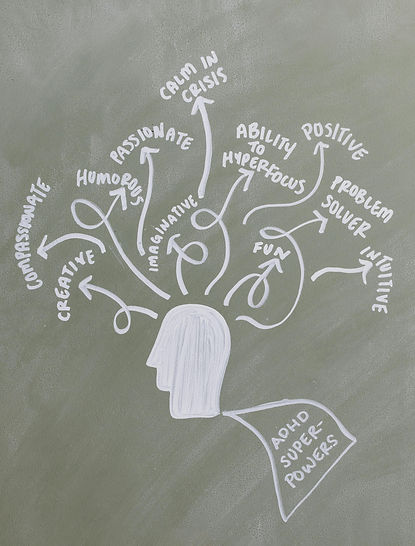
Sure, ADHD throws some curveballs, but it also equips you with unique strengths – think creativity that explodes off the canvas, an ability to see things from unexpected angles, and an energy that could light up a room!
So, buckle up, embrace the ride, and get ready to thrive with ADHD.




What is ADHD?
ADHD stands for Attention Deficit Hyperactivity Disorder. Imagine your brain as a conductor leading an orchestra. Normally, the conductor keeps all the musicians (brain functions) focused and working together. This lets you pay attention, plan, organise, and control impulses.
However, in individuals with ADHD, this conductor may struggle to maintain focus or synchronisation, resulting in symptoms like inattention, hyperactivity, and impulsivity. Their minds are like busy highways, with thoughts darting in all directions.
Even though it can be challenging, it is important to remember that ADHD does not mean you're less intelligent. It simply means the brain processes information and manages tasks differently. In fact, these same minds can also be incredibly innovative and imaginative!
Types of ADHD
ADHD is a complex condition that affects millions of people worldwide. ADHD manifests in different ways, leading to three primary subtypes:

Inattentive Type (ADHD-I)
People with ADHD-I mainly struggle to focus and pay attention. They might seem dreamy, forget things often, and have trouble staying organised. Imagine their mind as a butterfly flitting from flower to flower in a giant garden, always drawn to something new.
Here are some signs and symptoms of Inattentive ADHD:
-
Difficulty paying attention to details or making careless mistakes in schoolwork, work or other activities.
-
Trouble following through on instructions or finishing tasks, often not because of oppositional behaviour or defiance, but because of losing focus or easily sidetracked.
-
Difficulty organising tasks and activities.
-
Frequently losing things necessary for tasks and activities (e.g., school materials, pencils, books, wallets, keys, cell phones, eyeglasses, or tools).
-
Often easily distracted by extraneous stimuli.
-
Often forgetful in daily activities (e.g., running errands, returning calls, keeping appointments).
-
Aversion to tasks that require sustained mental effort (e.g., preparing school reports, completing forms, reviewing financial statements).
-
Daydreams frequently.
-
Difficulty with internal dialogue.
People with ADHD-I can be highly intelligent and creative. However, the challenges with focus and attention can make it difficult for them to reach their full potential. If you think you or someone you know may have ADHD-I, it is important to see a qualified mental health professional for diagnosis and treatment.

Hyperactive-Impulsive Type (ADHD-HI)
Hyperactive-impulsive ADHD, or ADHD-HI, is all about excessive activity and impulsive behavior. People with ADHD-HI act without thinking, can't seem to sit still, are constantly fidgeting, and crave stimulation. Their energy is like a nonstop dance, with impulsive decisions guiding their moves.
Here's a breakdown of some key signs:
-
Difficulty staying still in situations where it is expected (e.g., in class, during meals, at work).
-
Feeling restless or "on the go" even in calm or quiet settings.
-
Often running or climbing in situations where it is inappropriate (may not be as applicable for adults).
-
Difficulty engaging in activities that require remaining seated for long periods (e.g., for a lecture, in a meeting).
-
Always "on the go" or acting as if "driven by a motor" (may appear less true for adults).
-
Often blurting out an answer before a question has been completed.
-
Difficulty waiting their turn or following rules in games.
-
Frequently interrupting conversations or others' activities.
-
Difficulty engaging in quiet activities or leisure activities for long periods.
It is important to remember that these symptoms may manifest differently in adults compared to children. While the core challenges remain, the way they present themselves can change.

Combined Type (ADHD-C)
Combined ADHD, or ADHD-C is the type that combines both inattention and hyperactivity-impulsivity. It can be like riding a mental seesaw - sometimes overflowing with ideas and other times crashing down due to distractions. People with ADHD-C experience challenges from both sides of the spectrum.
They may struggle with focus and attention, appearing forgetful, disorganised, and easily sidetracked. However, they also exhibit signs of hyperactivity and impulsivity, fidgeting constantly, feeling restless, and blurting out answers before questions are finished. This combination can make daily life particularly challenging, as staying on track and managing impulses becomes even more difficult.
The good news is that with proper diagnosis and treatment, individuals with ADHD-C can learn strategies to manage their symptoms and thrive in various aspects of life.
In conclusion, ADHD is a complex neurodevelopmental disorder that presents itself in a variety of ways. Each subtype comes with its own set of challenges and It is important to note that these are just categories, and the specific way ADHD manifests can vary greatly from person to person. By exploring these subtypes and their unique characteristics, we can gain a deeper understanding of how ADHD presents itself and the challenges it can pose. If you suspect yourself or someone you know may have ADHD, seeking professional help is the first step towards achieving your full potential.
Symptoms of ADHD in Children, Teens, Adults & Old people
ADHD can appear differently throughout a person's lifespan, but the core symptoms of inattention, hyperactivity, and impulsivity are present at all ages. Here's a breakdown of how these symptoms might manifest in different age groups:
1
Children (Ages 5-12) & Teens (Ages 13-19)
ADHD is noticeable before the age of 6. These symptoms occur in various situations, both at home and at school. Children with ADHD may exhibit both inattentiveness and hyperactivity-impulsivity, or they may display symptoms of just one of these types of behaviour. Furthermore, hyperactivity may become less noticeable as teens mature.
Inattentiveness (Difficulty Concentrating and Focusing):
-
Difficulty paying attention in class easily distracted by sights or sounds
-
Forgetting instructions or losing belongings frequently
-
Daydreaming often
-
Careless mistakes in schoolwork.
-
Forgetfulness or losing things.
-
Difficulty sticking to tedious or time-consuming tasks.
-
Trouble listening to or following instructions.
-
Constantly changing activities or tasks.
Hyperactivity and Impulsiveness:
-
Inability to sit still, especially in calm or quiet surroundings.
-
Fidgeting and restlessness
-
Difficulty concentrating on tasks or staying seated
-
Excessive physical movement.
-
Frequent talking.
-
Acting without thinking about the consequences.
-
Little or no sense of danger.
-
Blurting out answers before questions are finished
2
Adults (Ages 20-64)
Untreated ADHD in adults can lead to mental and physical problems, affecting relationships and productivity. Additionally, hyperactivity may manifest more subtly in adults).
Inattentiveness (Difficulty Concentrating and Focusing):
-
Trouble focusing on work tasks
-
Difficulty completing projects on time
-
Forgetfulness
-
Problems prioritising and managing time effectively.
Hyperactivity and Impulsiveness:
-
Fidgeting or tapping feet
-
Feeling restless or internally wired
-
Difficulty relaxing
-
Excessive talking
-
Making rash financial decisions or impulsive
-
Difficulty following through on commitments
-
Problems controlling emotions or anger outbursts.
3
Older Adults (Ages 65+)
While ADHD is often associated with childhood, some older adults may continue to experience symptoms.
Inattentiveness (Difficulty Concentrating and Focusing):
-
Increased forgetfulness
-
Difficulty concentrating on conversations or following instructions
-
Problems staying organised or managing daily routines.
Hyperactivity and Impulsiveness:
-
May be less noticeable in older adults, but restlessness and difficulty relaxing can still be present.
-
Difficulty controlling emotions
-
Problems with decision-making, especially regarding finances or risky behaviour.
In conclusion, these are just general examples, and the way ADHD manifests can vary greatly from person to person within each age group. In some adults, ADHD may not be diagnosed until later in life, especially if symptoms were mild in childhood or if the person has developed coping mechanisms. It’s essential to recognize and address these symptoms, as they can impact daily life and well-being. Regardless of age, ADHD can be effectively managed with proper diagnosis and treatment.
Diagnosing ADHD
Diagnosing Attention Deficit Hyperactivity Disorder (ADHD) in the UK involves a comprehensive evaluation process rather than a single test. Let’s explore how ADHD is diagnosed for different age groups:

Children
and
Teens
-
Initial Assessment: If you suspect your child has ADHD, start by discussing your concerns with a GP (general practitioner).
-
Watchful Waiting: The GP may recommend a period of “watchful waiting” (around 10 weeks) to observe if symptoms improve, remain the same, or worsen.
-
Parent Training: Group-based parent training or education programs may be suggested to help parents learn effective strategies for managing ADHD-related challenges.
-
Formal Assessment: If symptoms persist and significantly impact daily life, the GP will refer your child to a specialist for a formal assessment.

Adults
-
GP Assessment: For adults with possible ADHD, the GP will assess symptoms and consider referral for an assessment if:
◦ Symptoms began during childhood and have persisted.
◦ Symptoms cannot be explained by a mental health condition.
◦ Symptoms significantly affect daily life (e.g., work, relationships).
-
Specialist Referral: Adults may be referred to a specialist (such as a psychiatrist or paediatrician) for a detailed assessment.

Assessment Process
-
Detailed Evaluation: The specialist gathers information through interviews, questionnaires, and observations.
-
Symptom Criteria: To be diagnosed with ADHD, specific criteria must be met:
◦ Inattentiveness: At least 6 symptoms of inattentiveness.
◦ Hyperactivity and Impulsiveness: At least 6 symptoms of hyperactivity and impulsiveness.
◦ Duration: Symptoms must persist for at least 6 months.
◦ Onset: Symptoms should have started before age 12.
-
Rule Out Other Causes: The assessment also rules out other possible causes for the symptoms.
Here are some resources to help you navigate getting an ADHD diagnosis in the UK:
Remember that seeking professional evaluation is crucial for accurate diagnosis and effective management of ADHD. Regardless of the route you choose, getting diagnosed with ADHD requires a specialist assessment. There is no single test for ADHD, and diagnosis is based on a combination of factors. If you are having trouble getting a referral through your GP, consider seeking a second opinion or contacting patient advocacy groups for support.
ADHD prevalence
ADHD is one of the most common neurodevelopmental disorders, affecting millions of children and adults worldwide. Research suggests that ADHD prevalence remains relatively stable across different cultures and socioeconomic backgrounds. While boys are traditionally diagnosed more frequently, a growing understanding of ADHD in girls and women is leading to a more accurate picture of its prevalence across genders.
The prevalence of ADHD varies across different age groups. Here's a breakdown of the prevalence figures:
1. Children and Teens:
-
Studies suggest around 3-5% of school-aged children in the UK have ADHD.
-
This translates to a significant number – with estimations reaching up to 694,000 children in the UK.
-
Boys are more likely to be affected than girls.
2. Adults:
-
The estimated prevalence of ADHD in adults is lower, at around 2-3.5%. The male-to-female ratio is approximately 3:1.
-
This translates to an estimated 1.9 million adults in the UK potentially having ADHD.
-
ADHD is associated with factors such as poverty, lower family income, and social class.
-
It is more frequent in unemployed individuals and those with disabilities.
3. Older Adults:
-
While ADHD is often associated with childhood, some older adults continue to experience symptoms.
-
The prevalence in older adults is not as well-defined but may persist in some cases.
In conclusion, these are prevalence estimates, and the exact number of people with ADHD in the UK may be higher or lower. Diagnosis rates for ADHD have been rising in recent years, especially among adults. There's debate on whether this reflects a true increase in ADHD or better identification of existing cases.. Boys are diagnosed at a much higher rate than girls (roughly 4:1). This might be due to girls presenting symptoms differently or under-diagnosis of ADHD in females.